Samuele Punzo

MSc AI Student & Research Assistant

About me

I am an MSc Artificial Intelligence student at the University of Amsterdam and a Research Assistant at the Institute for Logic, Language and Computation (ILLC). My research focuses on mechanistic interpretability of transformer models and explainable machine learning pipelines for biomedical applications.

Interests

  • Mechanistic Interpretability
  • Explainable AI
  • Natural Language Processing
  • Large Language Models
  • Biomedical Applications

Current Positions

  • Research Assistant
    ILLC, University of Amsterdam
  • Teaching Assistant — BSc Machine Learning
    Vrije Universiteit Amsterdam
📚 My Research

I am a Research Assistant at the Institute for Logic, Language and Computation (ILLC) at the University of Amsterdam, where I work on mechanistic interpretability of transformer models — specifically identifying the internal neural circuits responsible for linguistic disambiguation.

Previously, at the University of Pisa, I developed explainable machine learning pipelines for biomedical applications, including novel biomarker discovery for Multiple Sclerosis using multi-omics data (Microarray & scRNA-seq) and interpretability tools such as SHAP and LIME.

My research interests span mechanistic interpretability, explainable AI, NLP, and biomedical applications of machine learning.

Publications

Is my model perplexed for the right reason? Contrasting LLMs' Benchmark Behavior with Token-Level Perplexity
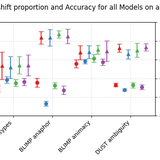
A principled interpretability framework based on token-level perplexity to test whether LLMs rely on linguistically relevant cues in benchmark evaluations.
Z. Prins
Equal contribution
, S. Punzo
Equal contribution
, F. Wildenburg
Equal contribution
, G. Cinà, S. Pezzelle
PDF
Is my model perplexed for the right reason? Contrasting LLMs' Benchmark Behavior with Token-Level Perplexity

Machine Learning for analysis of Multiple Sclerosis cross-tissue bulk and single-cell transcriptomics data
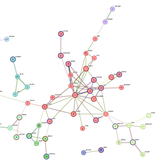
Integrative multi-omics and explainable ML analysis for pathway-level signatures discovery in Multiple Sclerosis. Under review at Scientific Reports.
F. Massafra
Equal contribution
, S. Punzo
Equal contribution
, S.G. Galfrè, A. Maglione, S. Pernice, S. Forti, S. Rolla, M. Beccuti, M. Clerico, C. Priami, A. Sîrbu
PDF
Machine Learning for analysis of Multiple Sclerosis cross-tissue bulk and single-cell transcriptomics data

A Machine Learning Pipeline for Multiple Sclerosis Biomarker Discovery: Comparing explainable AI and Traditional Statistical Approaches
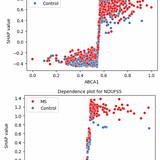
A Machine Learning pipeline comparing explainable AI and traditional statistical approaches for Multiple Sclerosis biomarker discovery.
S. Punzo, S.G. Galfrè, F. Massafra, A. Maglione, C. Priami, A. Sîrbu
PDF
A Machine Learning Pipeline for Multiple Sclerosis Biomarker Discovery: Comparing explainable AI and Traditional Statistical Approaches

Experience

Research Assistant

Institute for Logic, Language and Computation (ILLC) — UvA

Extending a token-level perplexity framework by identifying the internal neural circuits responsible for linguistic disambiguation.

Teaching Assistant — BSc Machine Learning course

Vrije Universiteit Amsterdam

Delivered two exercise lectures and one project session per week, guiding 10 groups of students through the development of their machine learning projects.

Research Assistant

BioMedical and Health Informatics Lab — University of Pisa

PANS project: Developed ML models to identify blood-brain barrier permeable proteins and metabolites linked to Pediatric Acute-onset Neuropsychiatric Syndrome. MEDICA project: Built a bioinformatics pipeline to compare Microarray integration methods (ComBat, XPN). Developed explainable ML pipelines for Microarray and scRNA-seq data to identify novel Multiple Sclerosis biomarkers and pathways, using DAVID, StringDB, and Cytoscape.

Education

MSc in Artificial Intelligence

University of Amsterdam

GPA: 8.6/10 (Excellent, A+ in US/UK scale). Relevant Courses: Machine Learning, Deep Learning, Reinforcement Learning, NLP, Fairness & Accountability for AI, Information Retrieval, Foundation Models.

BSc in Computer Science

University of Pisa

Grade: 110/110 with honours | GPA: 29/30. Bachelor Thesis: Research of new biomarkers for Multiple Sclerosis using Machine Learning techniques. Relevant Courses: Machine Learning, Statistics, Numerical Calculus (MatLab), OOP (Java), Web Scraping and Data Analysis (Python), Algorithms and Data Structures (C).
Awards
Lead The Future Mentee
Lead The Future ∙ Present
Selected as a mentee (acceptance rate <15%) for this leading STEM mentorship non-profit organisation.
Graduation with Honours
University of Pisa ∙ Present
Bachelor of Computer Science, 110/110 cum laude.
Top 5% of Students
University of Pisa ∙ Present
Among the 5% best students in all three academic years of the BSc.